
For most SMBs, the honest answer is no. Risk management is one of those areas where the spreadsheet keeps working until the day it doesn't, and by then the audit's on the calendar. The buyer's guides ranking on Google won't help much either, since most are written by the vendors charging $2,000 a month.
This article is for the moment before that. It walks through the six things that separate good platforms from a tool you'll abandon by month six, what to ignore in vendor demos, how to think about the middle ground between spreadsheets and enterprise GRC, and the right questions to ask before you sign.
Why this decision is awkward for SMBs
The risk and compliance software market splits cleanly into two tiers. The enterprise GRC platforms, the kind your CFO mentions when someone asks about ISO 27001 readiness, start around $24,000 a year and assume a dedicated risk team, a six-month implementation runway, and consultant budget. The other tier is $20-a-month task managers that handle the to-do list part of risk but skip the connections between risks, controls, and evidence.
Most SMBs need something between the two. A platform that supports ISO 27001 or SOC 2, with registers linking assets to risks to controls, AI guidance to set up the program, and on-demand reporting, all priced inside the $500-a-month budget most SMB risk leads work with. That middle ground was the missing tier for years. Decent options have only started showing up in the last 18 months.
The practical middle ground
| Option | Best for | Where it breaks | SMB fit |
|---|---|---|---|
| Spreadsheets | Starting a register quickly | Links between risks, controls, owners, evidence, and approvals disappear | Useful early, fragile by audit time |
| Task managers | Chasing actions and due dates | They track work, not assurance relationships | Good for follow-up, weak for compliance evidence |
| Enterprise GRC | Large teams with mature programs | Cost, implementation time, and admin overhead | Powerful, but often too heavy |
| Guardzy | SMBs building ISO 27001, SOC 2, or practical cyber governance | Keeps the structure without the enterprise rollout | Connected registers, AI guidance, reporting, and exports in one place |
Six features to compare in any risk management platform
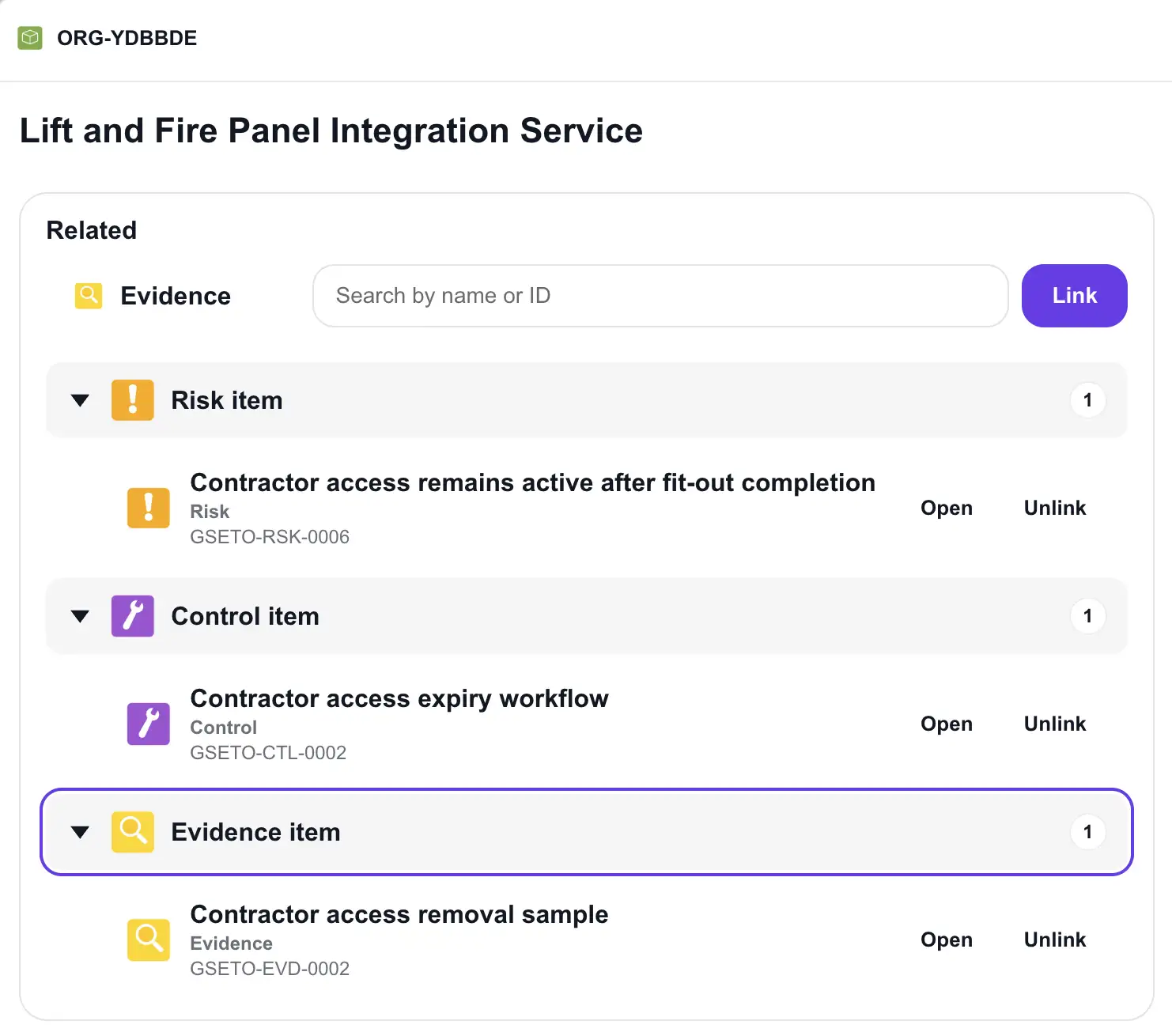
A connected register model
- Problem
- Separate sheets turn every audit into detective work.
- What to look for
- Assets, risks, controls, and evidence should form a traceable chain from any direction.
- Guardzy example
- A risk can point to its affected asset, required controls, owner, treatment, approvals, and evidence pack.
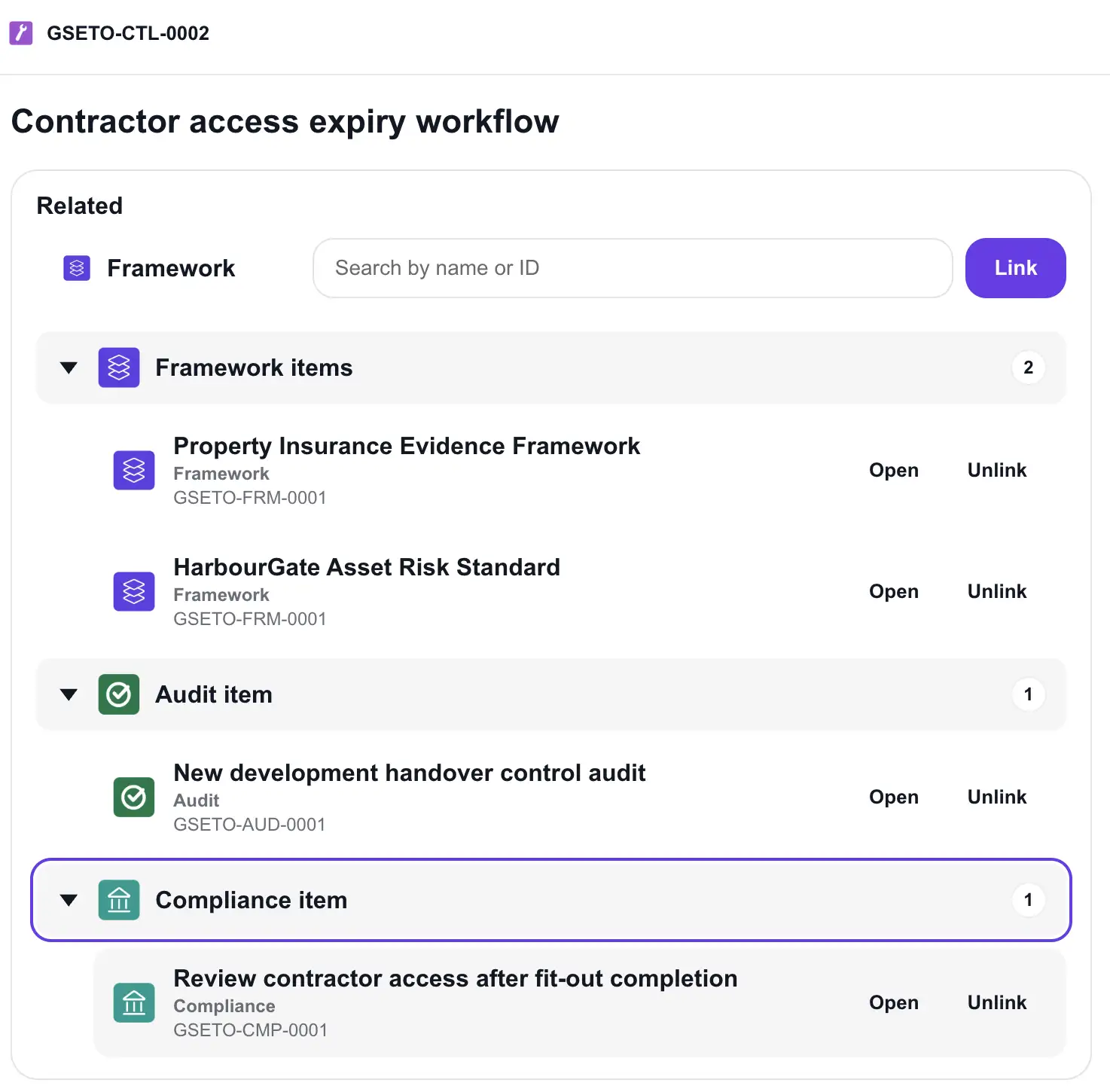
Multi-framework support that reuses work
- Problem
- Teams often rebuild the same control work when they add another framework.
- What to look for
- Control overlap should map across ISO 27001, SOC 2, NIST CSF, GDPR, and HIPAA.
- Guardzy example
- Guardzy lets existing control work support more than one framework instead of living in separate silos.
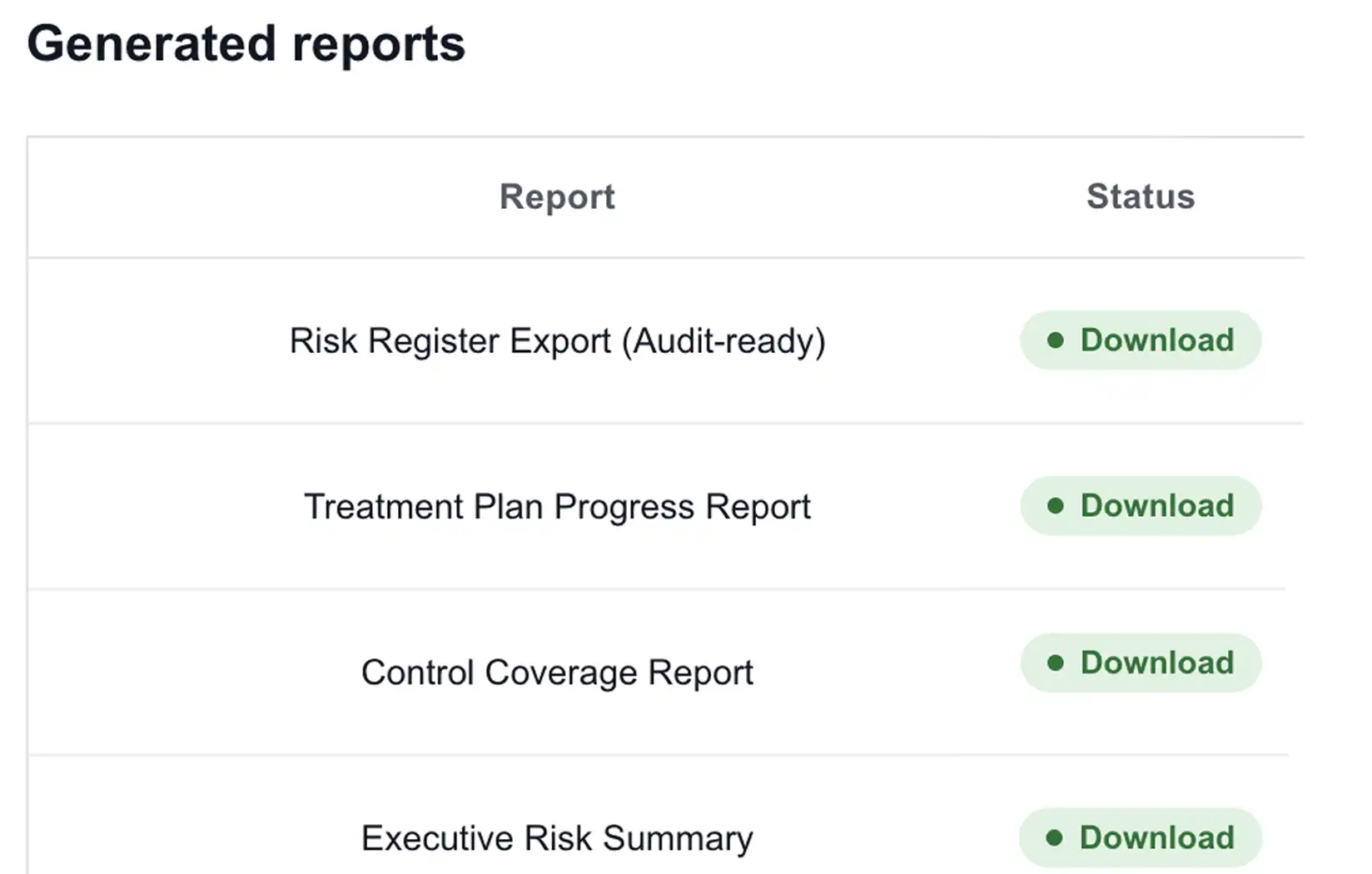
Reporting you can pull on demand
- Problem
- Executive summaries and evidence packs get rebuilt manually from stale data.
- What to look for
- Reports should generate from live register data with one or two clicks.
- Guardzy example
- Risk summaries, control coverage, and audit packs come from the same connected data your team maintains.
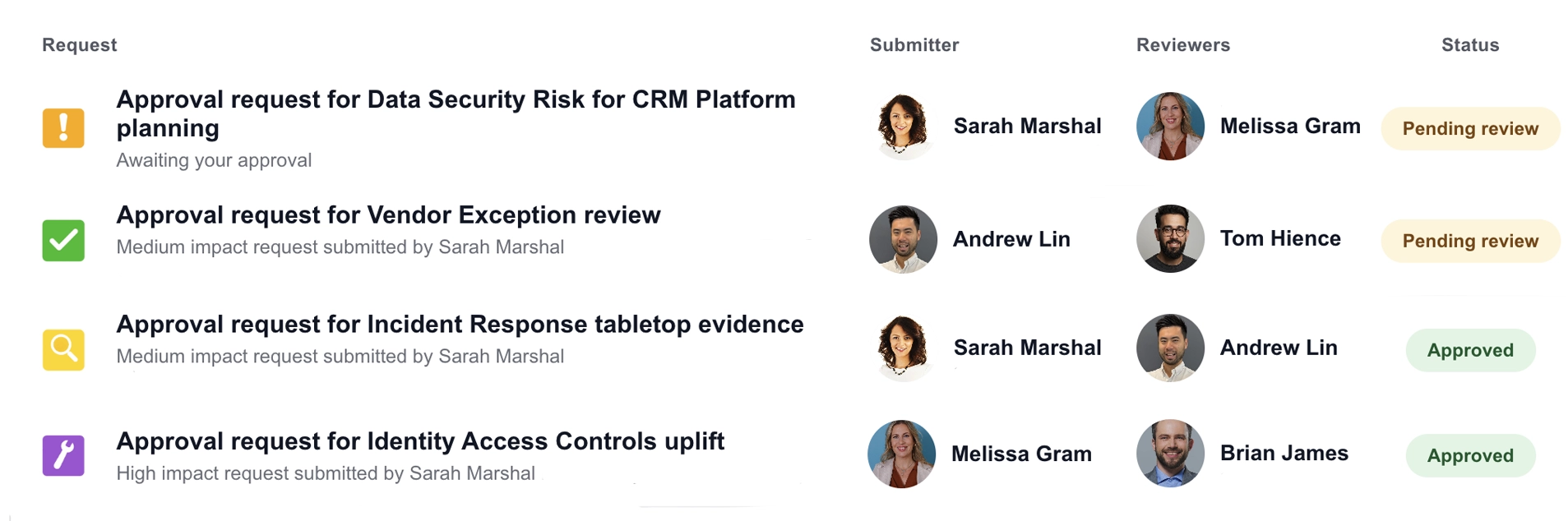
Approval and audit trails built in
- Problem
- Approvals in email create a second evidence hunt when auditors ask who signed off.
- What to look for
- Approval chains should capture reviewers, comments, timestamps, and item history.
- Guardzy example
- Decisions stay attached to the register item they belong to, not buried in someone's inbox.
Cloud document sync for policies and evidence
- Problem
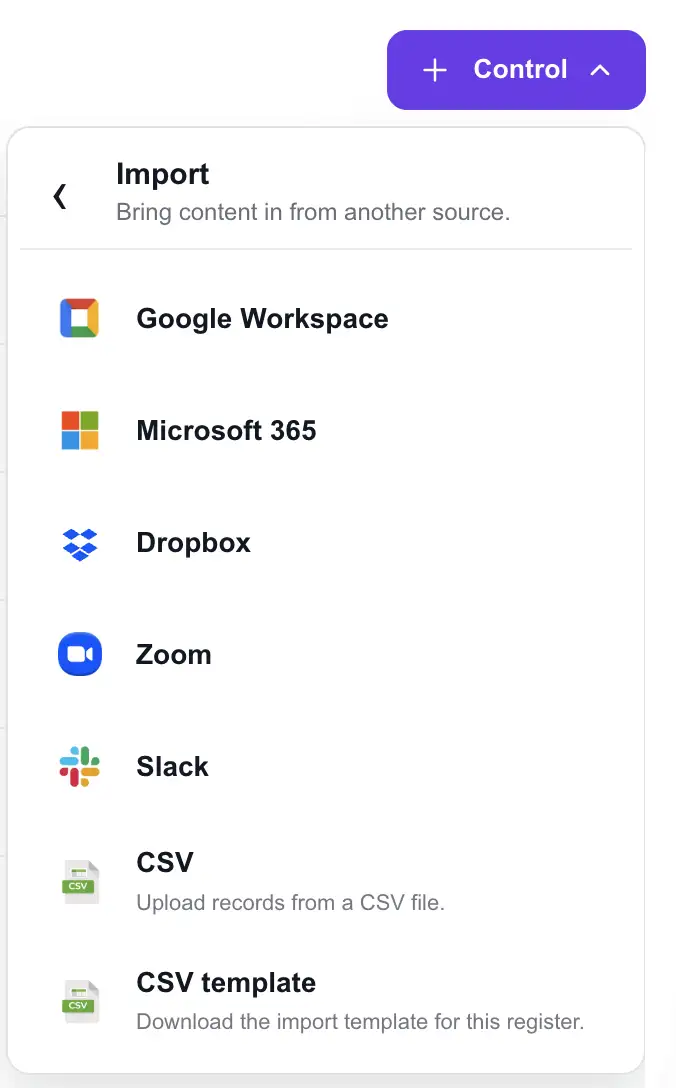
- Teams already work in Google Drive, OneDrive, Dropbox, and SharePoint.
- What to look for
- Live sync should connect existing folders to the right risks, controls, policies, and evidence.
- Guardzy example
- Guardzy keeps cloud documents available without asking the team to upload the same files again.
Pricing that scales without enterprise lock-in
- Problem
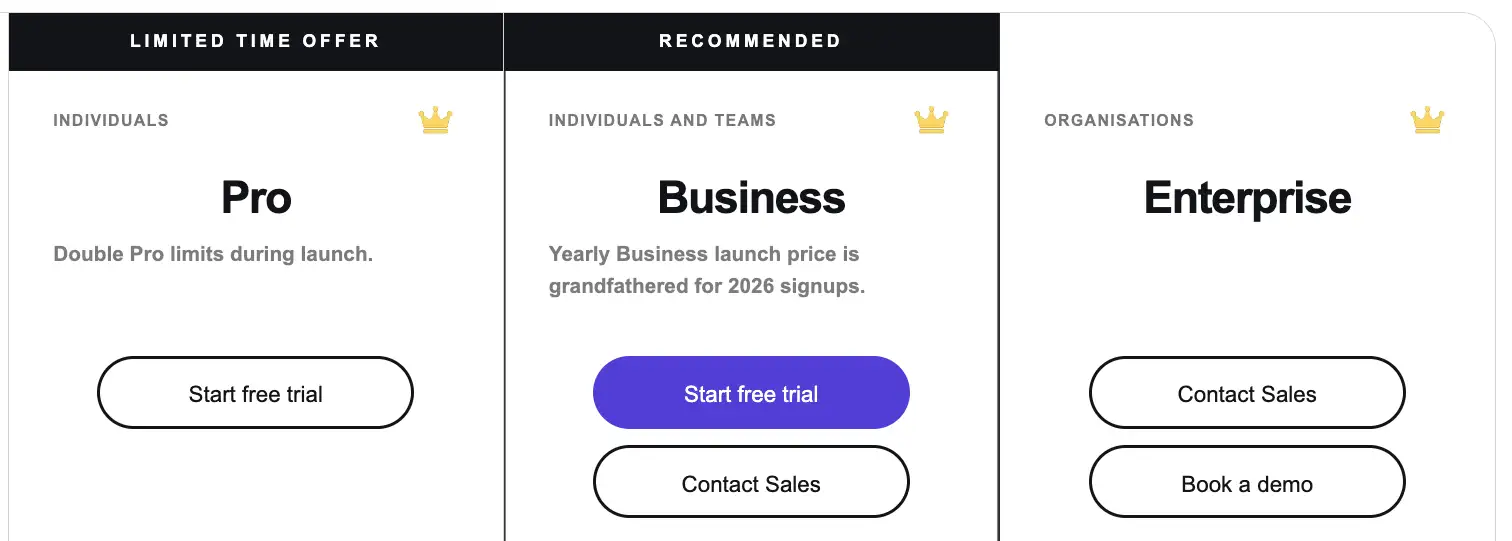
- Hidden implementation fees and contract minimums make the first year hard to predict.
- What to look for
- Visible pricing, per-seat plans, and a trial that uses real product surfaces.
- Guardzy example
- The pricing page should let you understand the commitment before a sales call.
Questions to ask before you sign
- Can I see a real customer's register, with their permission, rather than a demo dataset?
- What's the all-in cost for a 10-person team at year two pricing?
- Which compliance frameworks come configured out of the box, with which controls?
- Can I export my full register, evidence, and audit history if I leave?
- How do auditors access the platform during a review, and what does audit support look like in practice?
Walk into your next audit ready
Guardzy is built for SMBs that need real risk structure without a six-month GRC rollout.
- Connected registers across assets, risks, controls, evidence, approvals, tasks, vendors, audits, policies, and compliance.
- AI guidance and ISO 27001 documentation generated from live register data.
- Pricing starts at A$9 a month per person on the Pro tier.

Frequently asked questions
What is risk management software?
It's a platform that helps a business identify, plan for, and track risks to its assets, with registers, controls, evidence, and reporting connected in one system. Modern platforms support frameworks like ISO 27001 and SOC 2, replacing the patchwork of spreadsheets, SharePoint folders, and email threads most teams use today.
How much does risk management software cost?
Enterprise GRC platforms start around $24,000 a year and run upwards of $100,000 once implementation is factored in. SMB-focused platforms typically run $9 to $14 per user per month on entry tiers, landing in the $100 to $500 a month range for most teams on a business plan. Free tiers exist but usually cap the registers you can access.
What's the difference between GRC and risk management software?
GRC, or governance, risk, and compliance software, covers board-level governance, regulatory compliance, and risk management together. The standalone category focuses on the risk identification, treatment, and reporting parts of that broader picture. For most SMBs the two categories overlap enough that what matters is finding a platform fitting your team, budget, and frameworks, rather than choosing between the labels.